Category Archives: Anchor

Restoration of Distressed Liners at a Hazardous Waste Landfill

anchor pump side slope

Anchor Electric Piston Pump Brings Section of Landfill Back Into Compliance

A Midwest disposal facility found use of an Anchor Electric 101 top-head drive piston pump to effectively mitigate the effect of a crushed side slope well.

Early in 2003, during routine sampling of the secondary sump, the pump became stuck during extraction. Working as a team, the owner, designer, and contractor created a shaft-accessed repair design plan.

The design included extending a 10-foot diameter steel cased shaft to a depth of approximately 60 feet below waste surface and cutting a section of liner plate so it would conform to the shape of the sump.
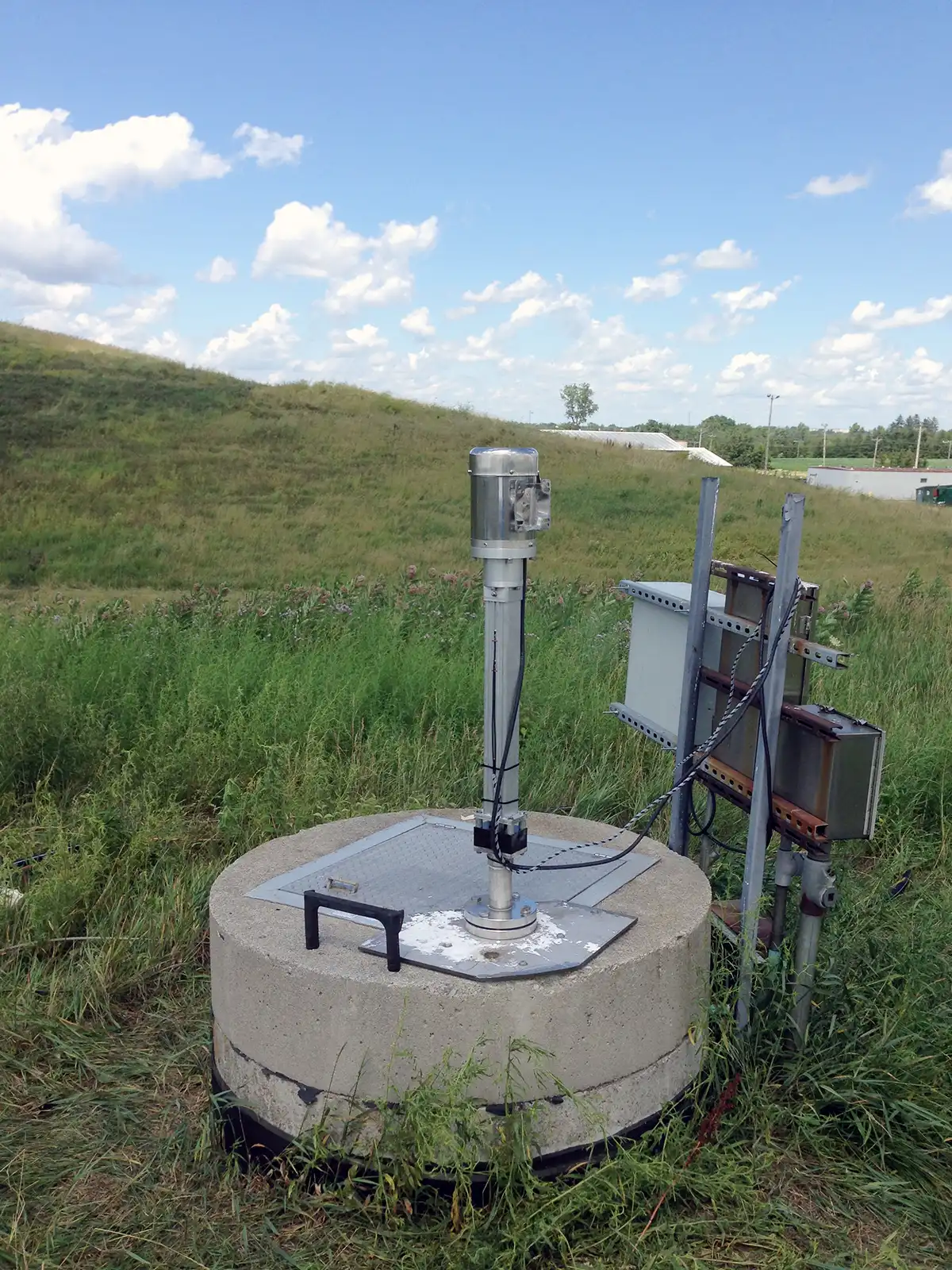
Anchor electric piston pump brings section of landfill back into compliance a midwest disposal facility found use of an anchor electric 101 top-head drive piston pump to effectively mitigate the effect of a crushed side slope well.

Pump With Staying Power Serves Oil Refinery for 25 Years

Pump lasts 25 years

Unit Prevents Oil Loss and Environmental Contamination

A refinery in Puerto Rico has now depended on a Blackhawk pump for a quarter-century. Why? It boils down to three things: effectiveness, durability, and ease of use.

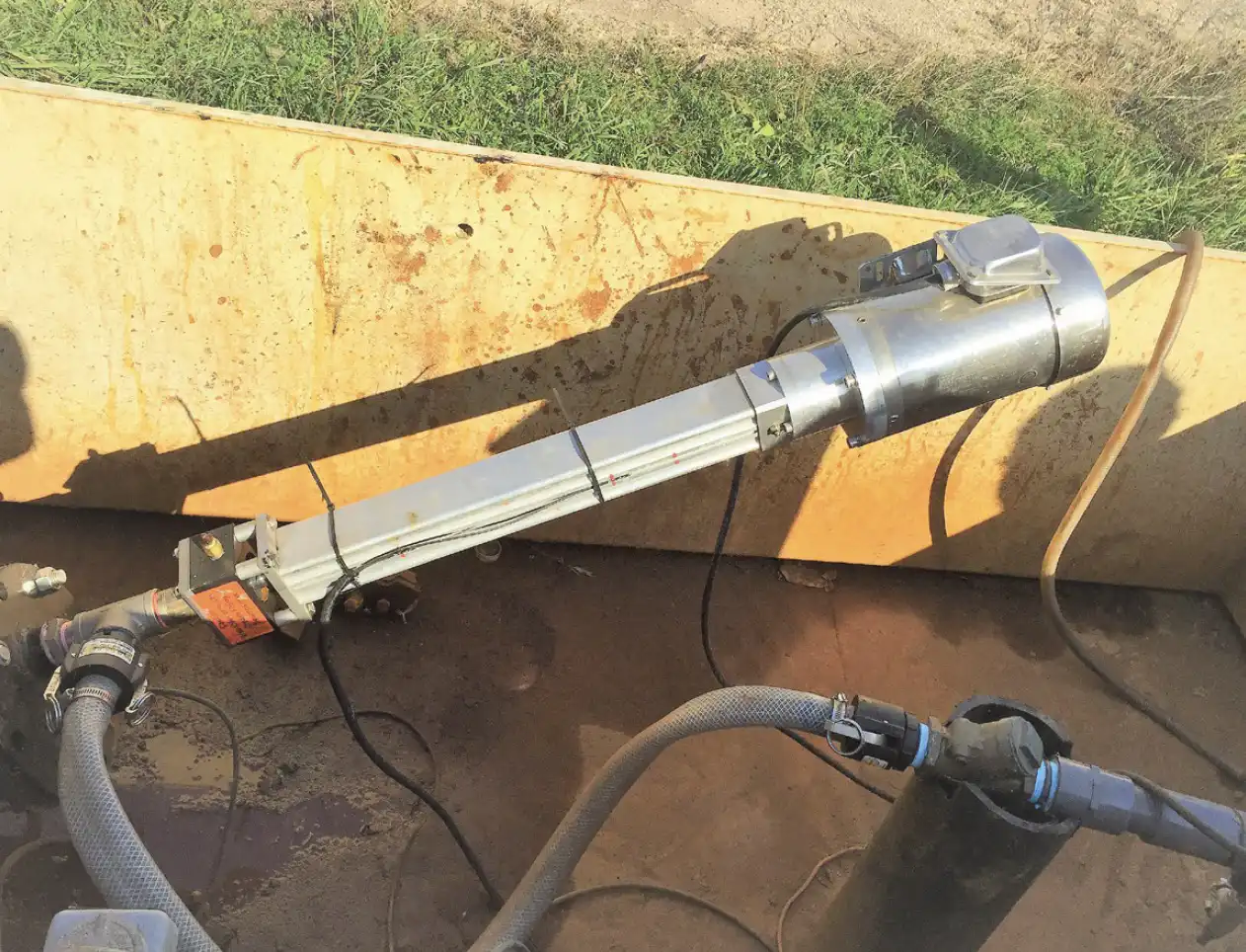
The unit – an Anchor Electric 102 top head drive positive displacement piston pump – is used in an application similar to oil well recovery pumps. This unit recovers oil from below ground that has been leaked or spilled during refining.

The pump prevents the harm to groundwater aquifers and other environmental features that would result from oil contamination, and it also reclaims revenue. In many cases, recovered oil can be cleaned, processed, and then used in petroleum products just as crude oil would be. The system protects the customer’s bottom line by preventing cleanup costs, legal actions, and fines; it benefits their bottom line by recovering lost oil.

A refinery in Puerto Rico has now depended on a Blackhawk pump for a quarter-century. Why? It boils down to three things: effectiveness, durability, and ease of use.

This Pump Doesn’t Flinch at Sticky Coal Tar

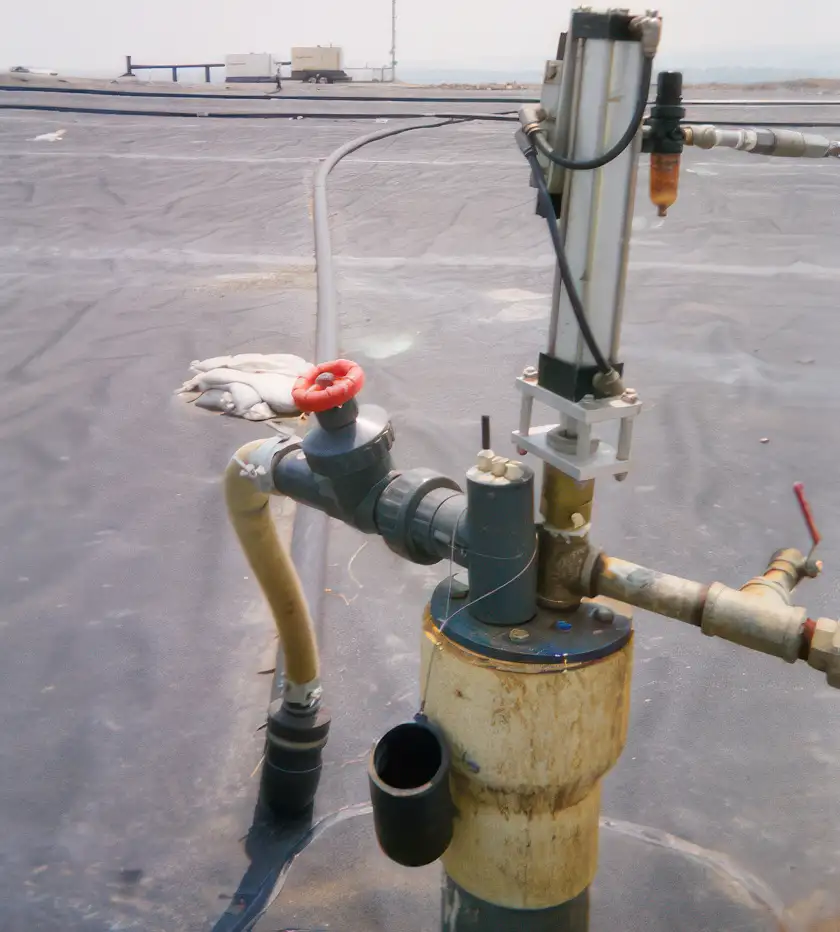
An industrial setup with various pipes, valves, and a mechanical component mounted on a metal surface. A top-head drive pump is interconnected with the red-handled valve and several hoses, while an open cylinder hangs near the bottom. The background features a broad, flat surface under clear skies.

Pneumatics and electrics pump coal tar from 32 feet; recover 11k gal. over 3 yrs.

Thick, viscous, oily and sticky — coal tar tops the list in contaminated site remediation and source recovery when it comes to stubborn and ugly cleanup, especially if there is lots of the stuff.
Because of the difficult nature of coal tar, initial recovery efforts were skimpy and sporadic at the 30-acre Calhoun Park Area Superfund Site in the historic harbor district of Charleston, S.C., until site managers brought in a Blackhawk Anchor Electric piston pump to replace pumps that were performing poorly.

The Anchor was successful in steadily removing sinking DNAPL coal tar, prompting purchase of three additional Blackhawk Anchor Electric and Atlas Pneumatic pumps. Over three years, the Blackhawks pumped more than 11,000 gallons of coal tar from substrate at depths to 32 ft. below grade.

Pneumatics and electrics pump coal tar from 32 feet; recover 11k gal. over 3 yrs. Thick, viscous, oily and sticky liquids.