Category Archives: Taming ET Sites

Leachate Removal Gets a Boost From Blackhawk Piston Pumps

Elevated Temp Lechate Removal

Collection at a Mid-Atlantic Landfill Keeps Leachate Levels Compliant

Leachate is a wastewater that forms when rainwater interacts with landfill material. The rain’s contact with buried waste draws out chemicals that can be harmful to the environment.

Maintenance and removal of leachate from landfills is crucial for the sites to stay in compliance; thus, specialized pumps are used on many sites to pump the wastewater to a collection point where it can be properly disposed of.

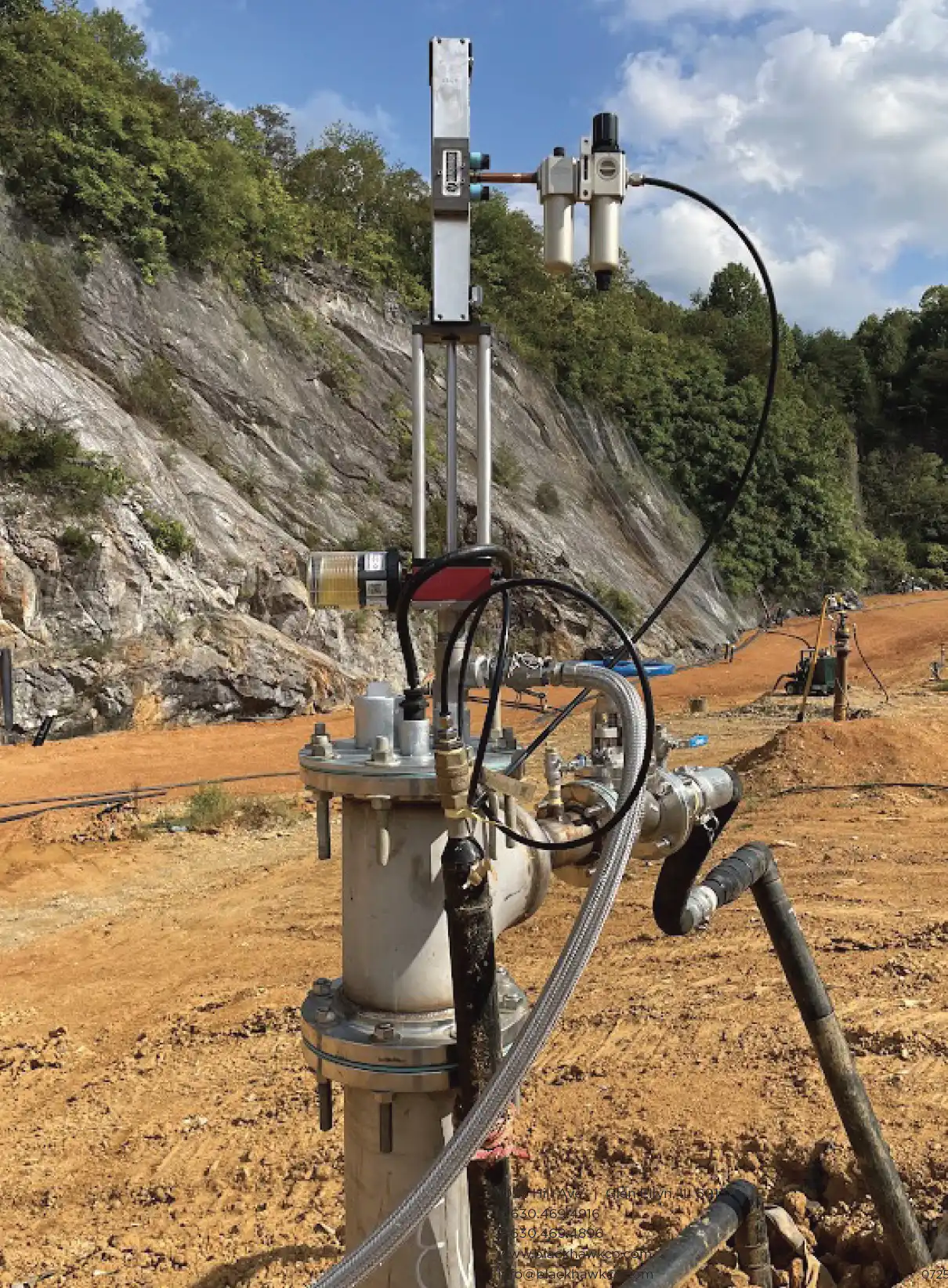
With the help of Blackhawk’s top head drive positive-displacement piston pump, a landfill located deep within a quarry was able to cull its leachate levels and control its methane gas emissions.
Collection at a mid-atlantic landfill keeps leachate levels compliant leachate is a wastewater that forms when rainwater interacts with landfill material. The rain’s contact with buried waste draws out chemicals that can be harmful to the environment.

Versatile Pumps Tame Elevated-Temp Landfills

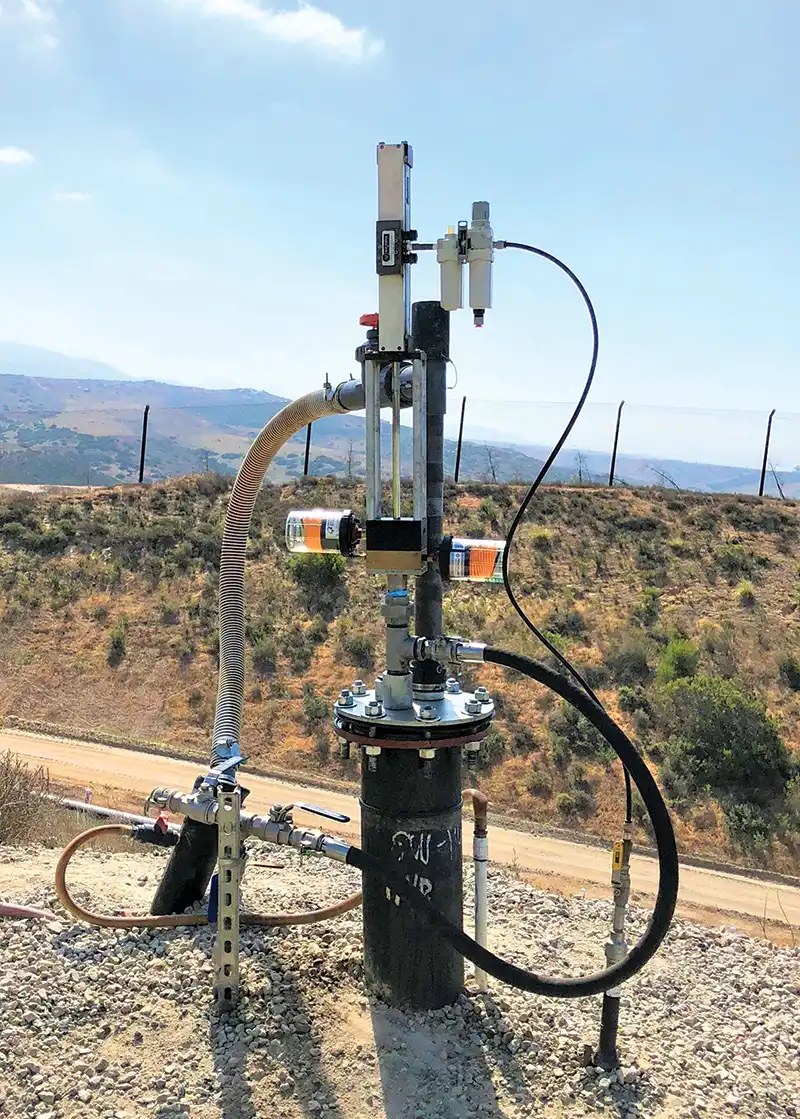
V-2 elevated temp pump with brass fittings

A North American Elevated Temperature Landfill (ETLF) Used Pneumatic Piston Pumps to Address Leachate Accumulation

More than a decade ago, a now-closed landfill outside a U.S. city was experiencing a public and legal reaction to increased odor, offsite gas migration, and leachate release.

The accumulation of altered-chemistry leachate – heavier than gas and changing its composition with age – is now believed to have been the cause, eventually creating a subsurface exothermic reaction over several acres that raised temperatures to an estimated 200°F or more in some zones.

A North American elevated temperature landfill (ETLF) used pneumatic piston pumps to address leachate accumulation
more than a decade ago, a now-closed landfill outside a u.S. City was experiencing a public and legal reaction to increased odor, offsite gas migration, and leachate
release.

Innovative Strategies for ETLF Management and Compliance

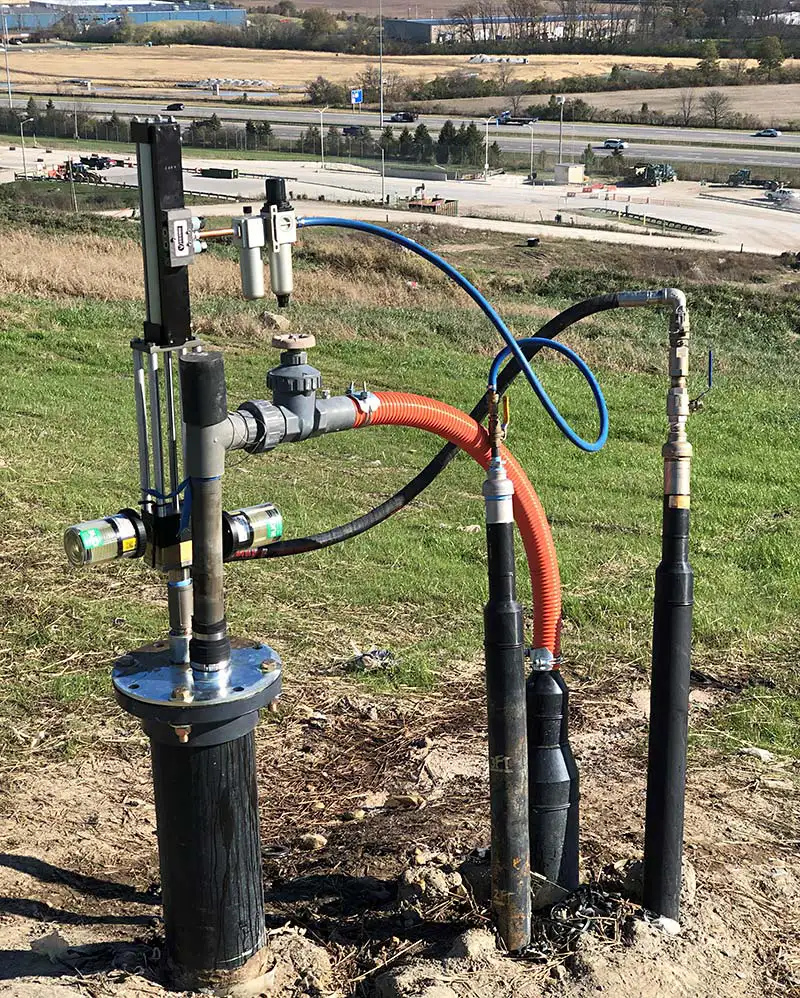
An outdoor setup featuring various pipes, valves, and gauges connected to a gas extraction wellhead with a top-head drive pump. The equipment is installed on a grassy hill with a highway and industrial buildings visible in the background. Colorful hoses are attached to the apparatus.

The ETLF Issue

For the past several years, a growing number of landfill managers have confronted temperatures ranging from 150°F to 250°F or more (65°C to 121°C) from deep inside larger, wetter, maturing sites — not from subsurface fires but from biological or chemical exothermic reactions within zones of the landfill itself.

High concentrations of varied, recombinant leachate compositions in these Elevated Temperature Landfills (ETLFs) can lead to higher costs for treatment or even the refusal of local wastewater treatment plants to accept the leachate, according to a three-part series by Waste 360 in conjunction with ELEF.

Elevated temperatures also may result in slope instability due to reduced waste strength or increased liquid- or gas-pore pressures; surprise sinkholes, and rapid settlement – all safety and infrastructure issues.

In addition, odor and the possibility of offsite gas migration and leachate release have resulted in public demands for tighter operations and oversight and, occasionally, litigation. Research into the causes and spread of ETLFs is ongoing.

For the past several years, a growing number of landfill managers have confronted temperatures ranging from 150°F to 250°F or more (65°C to 121°C) from deep inside larger, wetter, maturing sites — not from subsurface fires but from biological or chemical exothermic reactions within zones of the landfill itself.