Category Archives: Landfill Leachate

Leachate Removal Gets a Boost From Blackhawk Piston Pumps

Elevated Temp Lechate Removal

Collection at a Mid-Atlantic Landfill Keeps Leachate Levels Compliant

Leachate is a wastewater that forms when rainwater interacts with landfill material. The rain’s contact with buried waste draws out chemicals that can be harmful to the environment.

Maintenance and removal of leachate from landfills is crucial for the sites to stay in compliance; thus, specialized pumps are used on many sites to pump the wastewater to a collection point where it can be properly disposed of.

With the help of Blackhawk’s top head drive positive-displacement piston pump, a landfill located deep within a quarry was able to cull its leachate levels and control its methane gas emissions.
Collection at a mid-atlantic landfill keeps leachate levels compliant leachate is a wastewater that forms when rainwater interacts with landfill material. The rain’s contact with buried waste draws out chemicals that can be harmful to the environment.

Versatile Pumps Tame Elevated-Temp Landfills

V-2 elevated temp pump with brass fittings

A North American Elevated Temperature Landfill (ETLF) Used Pneumatic Piston Pumps to Address Leachate Accumulation

More than a decade ago, a now-closed landfill outside a U.S. city was experiencing a public and legal reaction to increased odor, offsite gas migration, and leachate release.

The accumulation of altered-chemistry leachate – heavier than gas and changing its composition with age – is now believed to have been the cause, eventually creating a subsurface exothermic reaction over several acres that raised temperatures to an estimated 200°F or more in some zones.

A North American elevated temperature landfill (ETLF) used pneumatic piston pumps to address leachate accumulation
more than a decade ago, a now-closed landfill outside a u.S. City was experiencing a public and legal reaction to increased odor, offsite gas migration, and leachate
release.

Restoration of Distressed Liners at a Hazardous Waste Landfill

anchor pump side slope

Anchor Electric Piston Pump Brings Section of Landfill Back Into Compliance

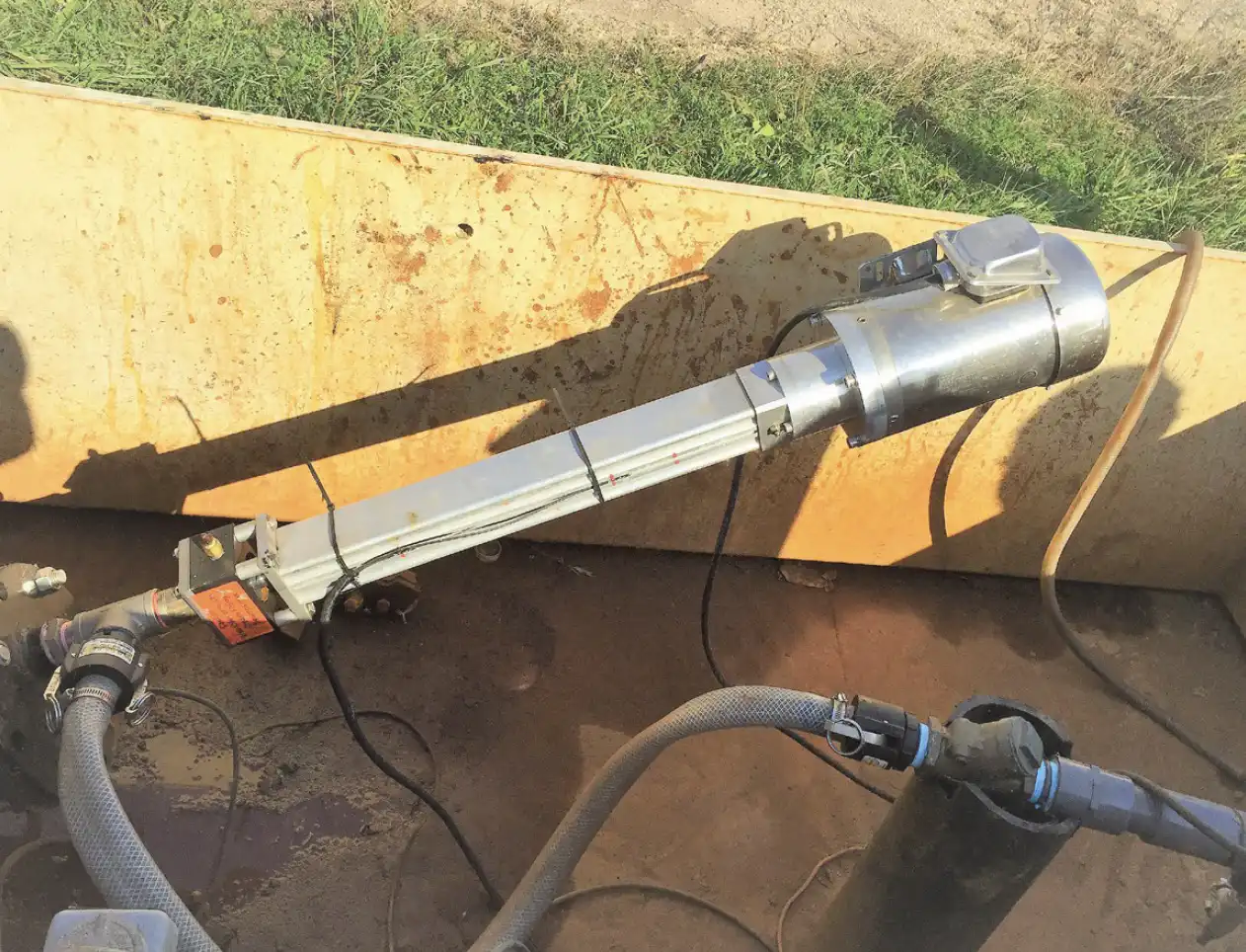
A Midwest disposal facility found use of an Anchor Electric 101 top-head drive piston pump to effectively mitigate the effect of a crushed side slope well.

Early in 2003, during routine sampling of the secondary sump, the pump became stuck during extraction. Working as a team, the owner, designer, and contractor created a shaft-accessed repair design plan.

The design included extending a 10-foot diameter steel cased shaft to a depth of approximately 60 feet below waste surface and cutting a section of liner plate so it would conform to the shape of the sump.

Anchor electric piston pump brings section of landfill back into compliance a midwest disposal facility found use of an anchor electric 101 top-head drive piston pump to effectively mitigate the effect of a crushed side slope well.

Blackhawk Solar Pumps Transform Former Landfill Site

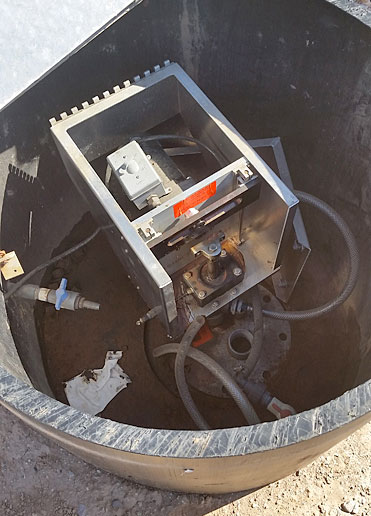
An overhead view of a large cylindrical metal container housing complex industrial machinery with various components, wires, and tubes. A piece of white paper and a small blue and white tool sit at the bottom, adjacent to a top-head drive pump.

Solars Replace Submersibles to Keep Old Landfill Compliant in New Life as City Park

A recreation area in the Southwestern U.S. is a big hill covered by boulders encased in sturdy wire and decorated with wildflowers. There’s a good chance the nearby residents visiting the dog park, archery range, and playground don’t know (or remember) that the mound was, until 2005, the city landfill.

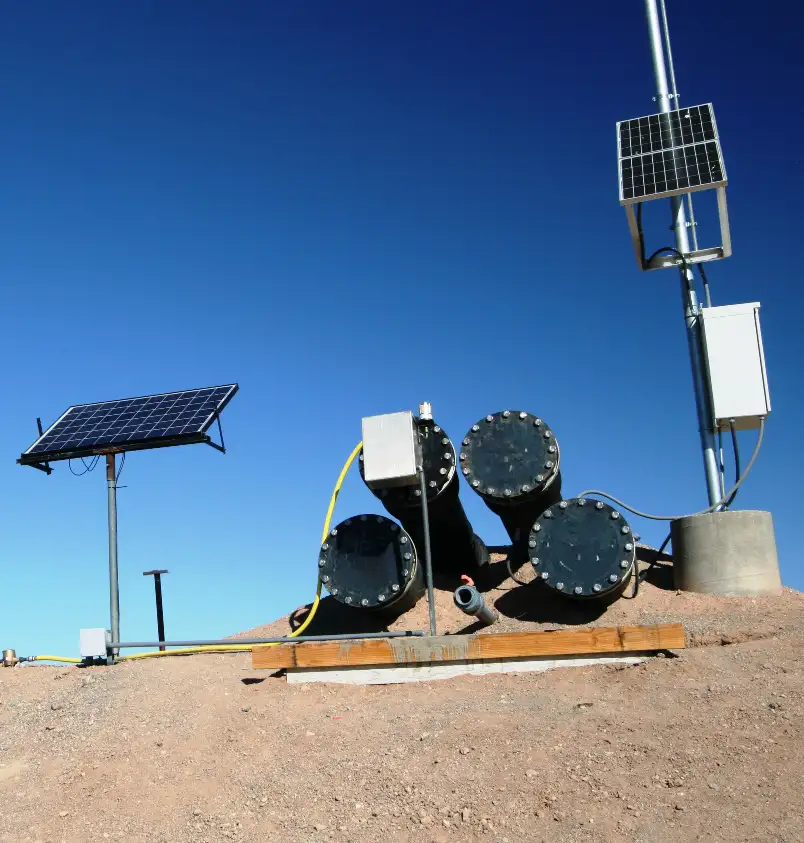
They certainly don’t see the four Apollo™ solar piston pumps hidden in caissons and powered by unobtrusive low-rise solar panels behind a ridge, which help keep the closed site EPA compliant.

There’s a good chance the Chandler, Ariz., residents visiting the dog park, archery range and playground don’t know (or remember) that the mound was, for 30 years until 2005, the city landfill.

Pumping the Sump – Without the Biofouling

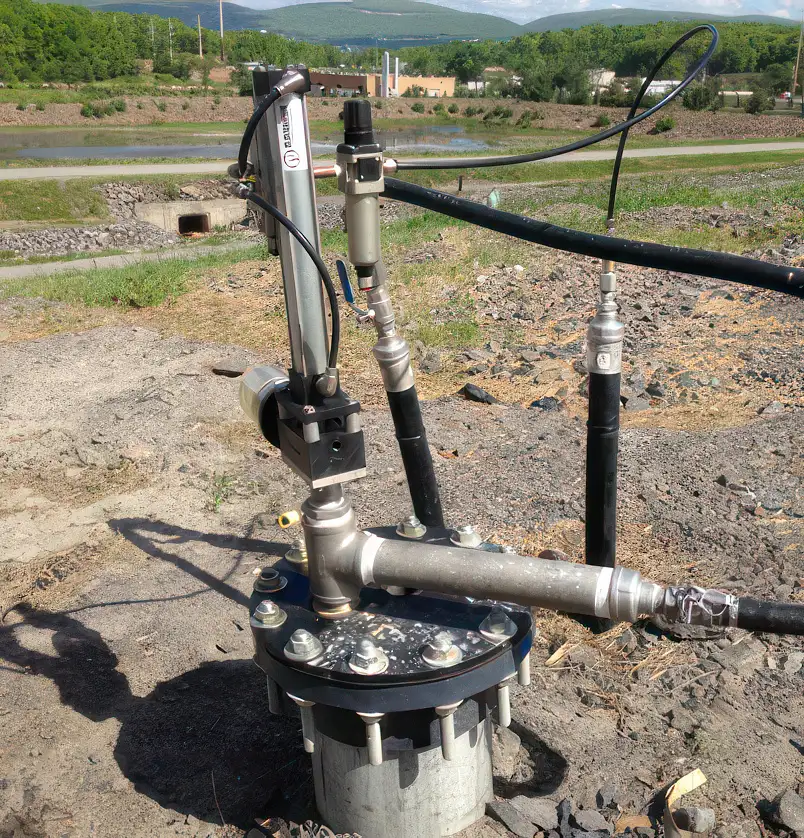
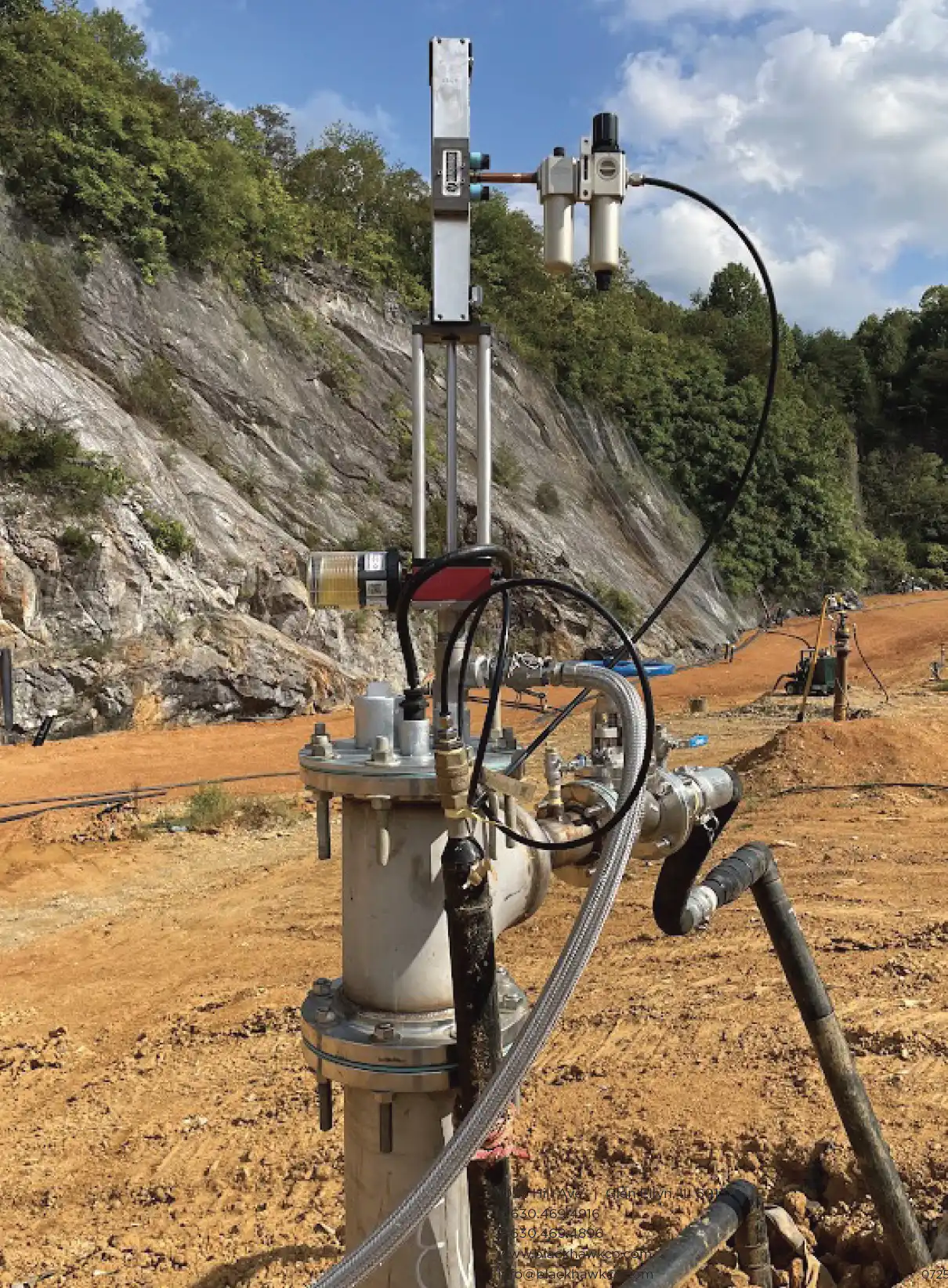
Close-up view of a groundwater monitoring well installation, featuring a well cap with various pipes, valves, and sensors above ground, including a top-head drive pump. The background includes a grassy landscape, trees, and distant buildings under a clear blue sky.

The Clean and Reliable Edge Pump Offers Ease of Maintenance, Draining for Landfill

When bio-growth on a competitor’s airlift pump rendered it unusable in a landfill sump at a remarkably clean, state-of-the-art facility in the Northeast, the nationally recognized landfill installed the popular Edge Pneumatic Piston Pump™ from Blackhawk.

Biofouling is unacceptable to the ISO-awarded managers of the privately owned 720-acre site, which receives an average of 4,750 tons of solid waste a day and is proud of its environmental management system.

Pumping the Sump – without the Bio-Fouling When bio-growth on a competitor’s airlift pump rendered it unusable in a landfill sump at a remarkably clean, state-of-the-art facility.

Keeping Landfill Gas Flowing with Horizontal Piston Pumps

Solar panel on a pole beside a cluster of large horizontal pumps.

Supporting Productive Horizontal Wells

Horizontal gas wells provide operators with greater access to gas reserves, helping improve gas collection performance and recovery. However, as waste cells settle over time, these wells can develop low spots where liquids, including condensate and leachate accumulate. When liquid becomes trapped in these sections of the well, gas flow is restricted, reducing the effectiveness of the gas collection system.

To address this challenge, Blackhawk Technology developed horizontal piston pump solutions specifically designed to remove trapped liquids from horizontal landfill gas wells and help operators maintain consistent gas flow and recovery.

Horizontal gas wells provide operators with greater access to gas reserves, helping improve gas collection performance and recovery. However, as waste cells settle over time, these wells can develop low spots

Scotch & Solar: An Off-Grid Landfill Solution

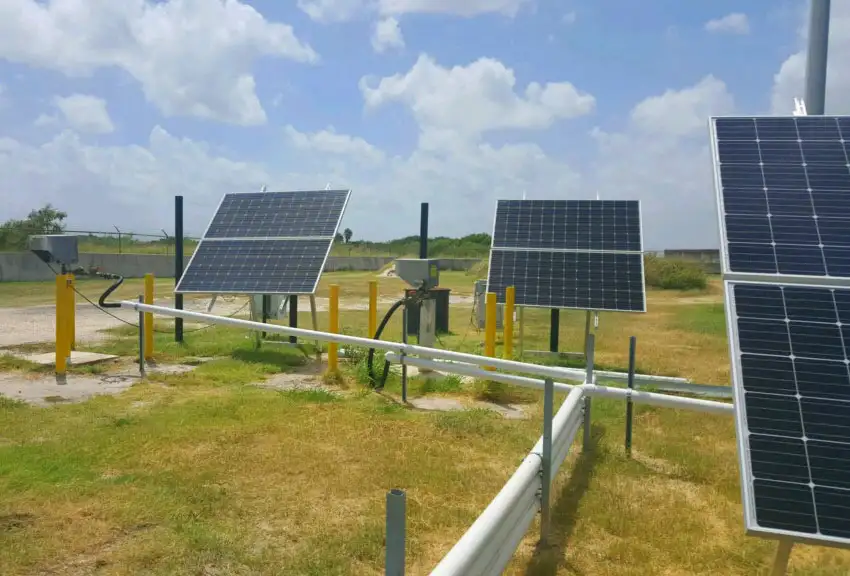
Three solar panels installed outdoors on grassy land, tilted to capture sunlight, with some utility poles and piping visible, under a partly cloudy blue sky.

An Argument for the Most Versatile Combo in Environmental Pumping

It’s simple, dependable, cost-effective, portable, versatile, durable and moves virtually anything that flows. Three ingredients: 1) The “old-reliable” piston-pump downhole, 2) the top-head driver (with only four moving parts) and 3) the solar panel.

The combination is increasingly being used at landfills, toxic-remediation sites, biogas and pipeline condensate operations, coal-ash and coal-tar recovery zones, petrochemical plants, remote/closed sites and for other applications benefitting from low-flow, controlled pumping not served by trenched power.

It’s simple, dependable, cost-effective, portable, versatile, durable and moves virtually anything that flows. Three ingredients: 1) The “old-reliable” piston-pump downhole, 2) the top-head driver (with only four moving parts) and 3) the solar panel.

Side-Slope Pumps Replace Crusty Submersibles

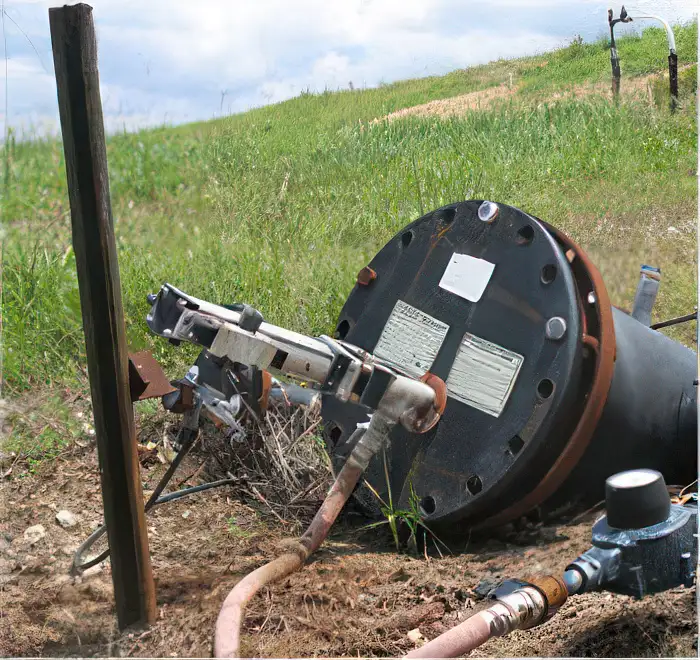
A large cylindrical top-head drive pump lies on its side in an open grassy area. Several pipes extend from the pump, which seems to be disconnected from its original setup. A wooden stake and additional piping are visible nearby. The sky is partly cloudy.

After Hot, Aging Landfill Adds Gas System, Blackhawk Side-Slopes Take Over for Crusty Submersibles

A large, older landfill in a Southern state was baffled by significant changes in its operating characteristics after installing a landfill gas system.

The conscientiously well-run site, opened more than 20 years ago, always has been challenging — extremely harsh, hot and highly volatile. The regional gas manager called it more than a typical landfill, with high variability and breadth in the stream of accepted waste — 40-50 percent trash, 10 percent construction debris, plus significant amounts of industrial waste, bio solids, sludges, solidified liquids, offset products, ash and heavy metals. Industrial waste and fill are used as cover. There is little oxygen and no leachate fingerprint, the manager says.

After Hot, Aging Landfill Adds Gas System, Blackhawk Side-Slopes Take Over for Crusty Submersibles

Innovative Strategies for ETLF Management and Compliance

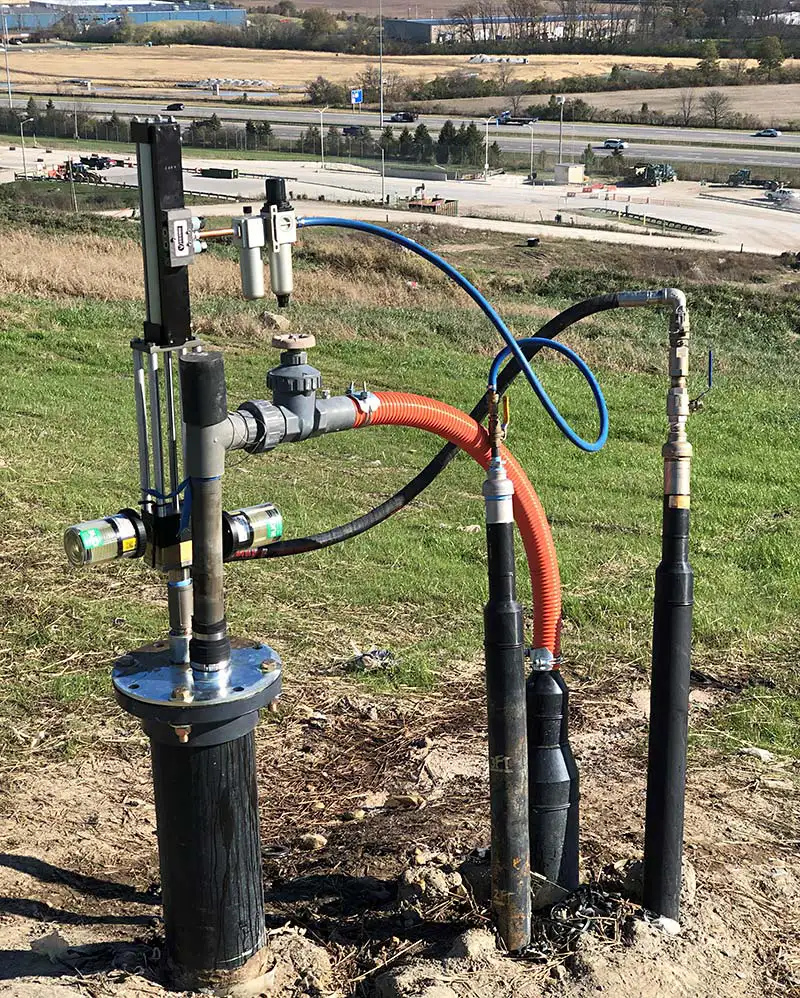
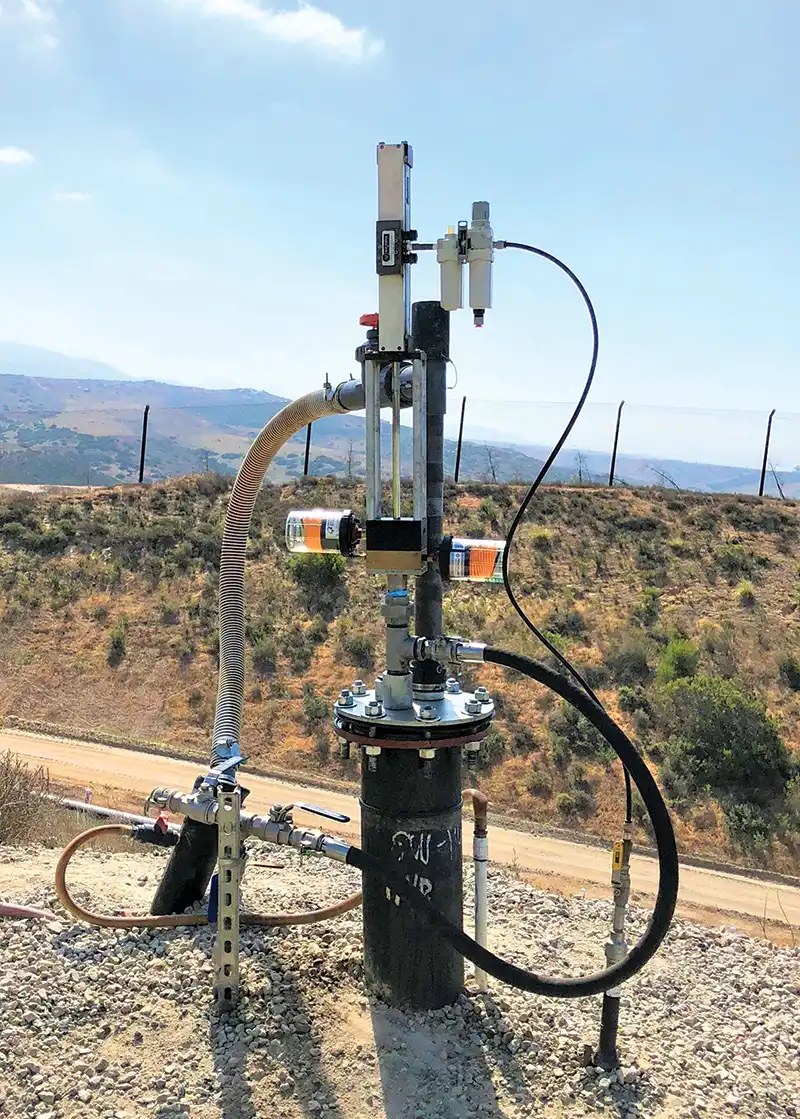
An outdoor setup featuring various pipes, valves, and gauges connected to a gas extraction wellhead with a top-head drive pump. The equipment is installed on a grassy hill with a highway and industrial buildings visible in the background. Colorful hoses are attached to the apparatus.

The ETLF Issue

For the past several years, a growing number of landfill managers have confronted temperatures ranging from 150°F to 250°F or more (65°C to 121°C) from deep inside larger, wetter, maturing sites — not from subsurface fires but from biological or chemical exothermic reactions within zones of the landfill itself.

High concentrations of varied, recombinant leachate compositions in these Elevated Temperature Landfills (ETLFs) can lead to higher costs for treatment or even the refusal of local wastewater treatment plants to accept the leachate, according to a three-part series by Waste 360 in conjunction with ELEF.

Elevated temperatures also may result in slope instability due to reduced waste strength or increased liquid- or gas-pore pressures; surprise sinkholes, and rapid settlement – all safety and infrastructure issues.

In addition, odor and the possibility of offsite gas migration and leachate release have resulted in public demands for tighter operations and oversight and, occasionally, litigation. Research into the causes and spread of ETLFs is ongoing.

For the past several years, a growing number of landfill managers have confronted temperatures ranging from 150°F to 250°F or more (65°C to 121°C) from deep inside larger, wetter, maturing sites — not from subsurface fires but from biological or chemical exothermic reactions within zones of the landfill itself.