
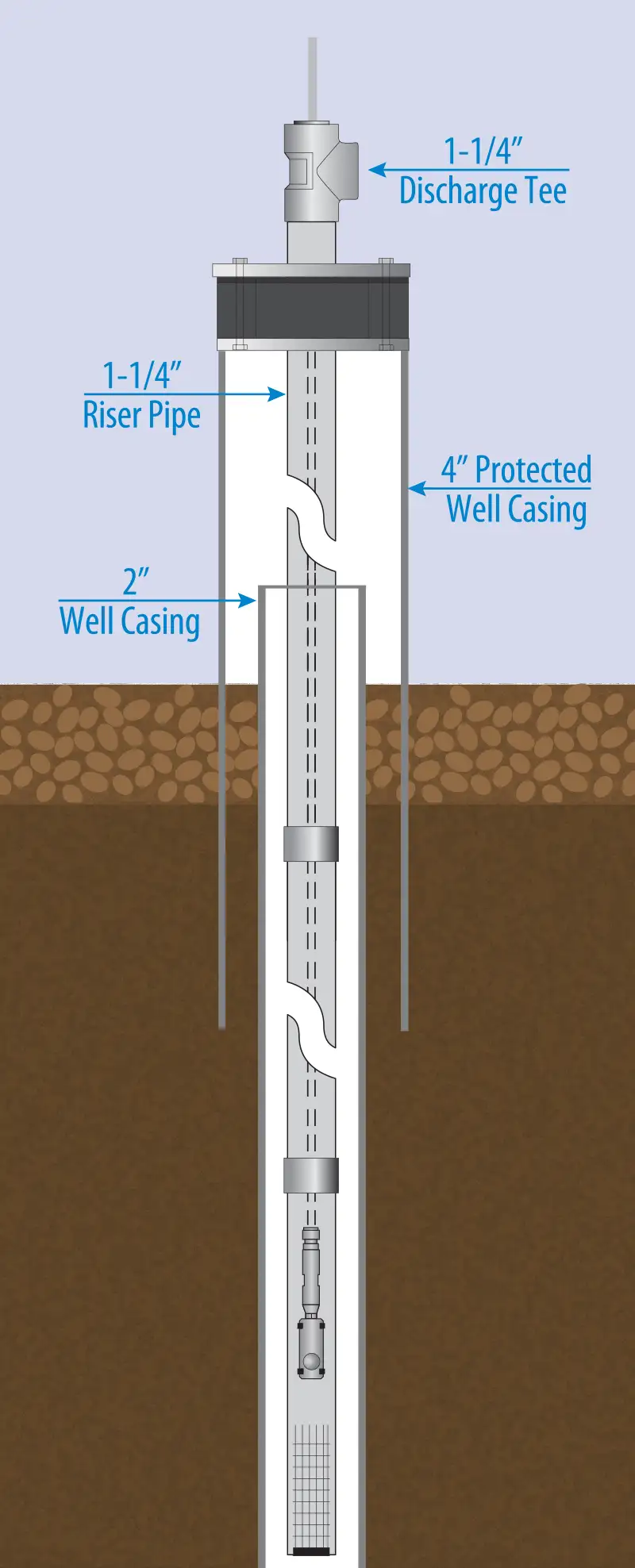
WHERE SAMPLING FALLS SHORT
Groundwater sampling demands precision, consistency, and minimal disturbance. For years, bladder pumps have been a standard solution because they isolate drive gas from the sample, helping reduce aeration and turbulence.
However, as sampling conditions become more complex, especially in deeper wells, traditional systems can introduce new challenges.
At groundwater monitoring sites across the U.S., operators relied on bailers and bladder pumps to collect samples. While widely used, these methods often introduced inconsistencies in both performance and sample integrity.
Bladder pumps rely on flexible internal components that can wear over time. As those components degrade or fail, compressed air can be introduced into the well, contaminating samples and requiring rework.
In practice, this meant:
- Frequent bladder failures and replacements
- Inconsistent flow rates
- Limited depth capability
- Increased maintenance and downtime
These issues often led to contaminated groundwater samples and the need to repeat sampling events, impacting both efficiency and data reliability.