Category Archives: Case Studies

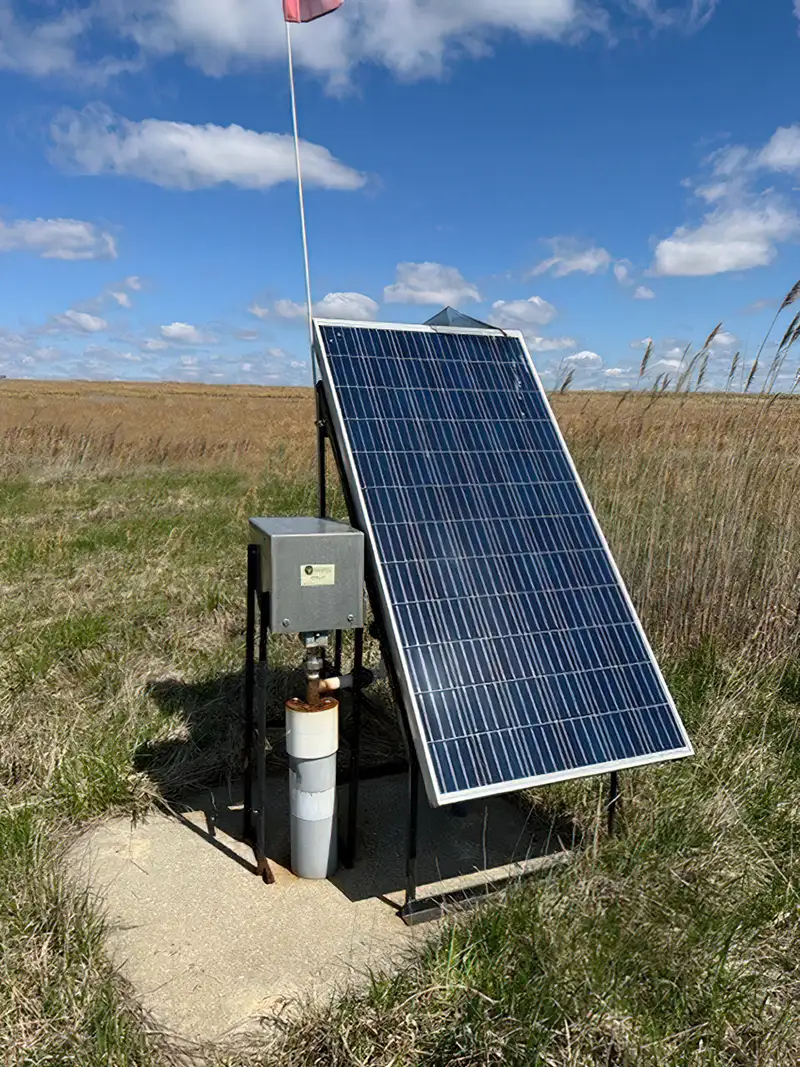
Remote Leachate Control with Blackhawk Solar Pump Systems

A solar panel is mounted on a metal frame in an open field with tall grass, connected to an electrical box and a cylindrical pipe below, resembling a top-head drive pump. A flag is attached to the top of the frame. The sky is partly cloudy with bright sunlight illuminating the scene.

Apollo Solar Pumps Operate at
Remote Sites, Without Trenched Power

Near coal-fired electric power plants across the U.S. lies the residue of burned bituminous. The EPA calls it Coal Combustion Residuals (CCRs) — a combination of powdery light ash, heavy bottom ash, boiler slag and flue-gas desulfurization material.

The residue is commonly known as coal ash. It is often buried at sites officially classified as solid-waste landfills.

As with all landfills, rainwater can infiltrate a site to create liquid leachate. Coal-ash fluid is clear but can contain salts, heavy metals and other toxic chemicals. Fugitive coal-ash leachate can threaten public health.

Positive-displacement solar piston units pump virtually anything that flows, including high temperature, viscous or foamy fluids at any pH; operate at any angle including horizontal; are unaffected by changes in positive or negative pressure; can run dry without harm;

Innovative Strategies for ETLF Management and Compliance

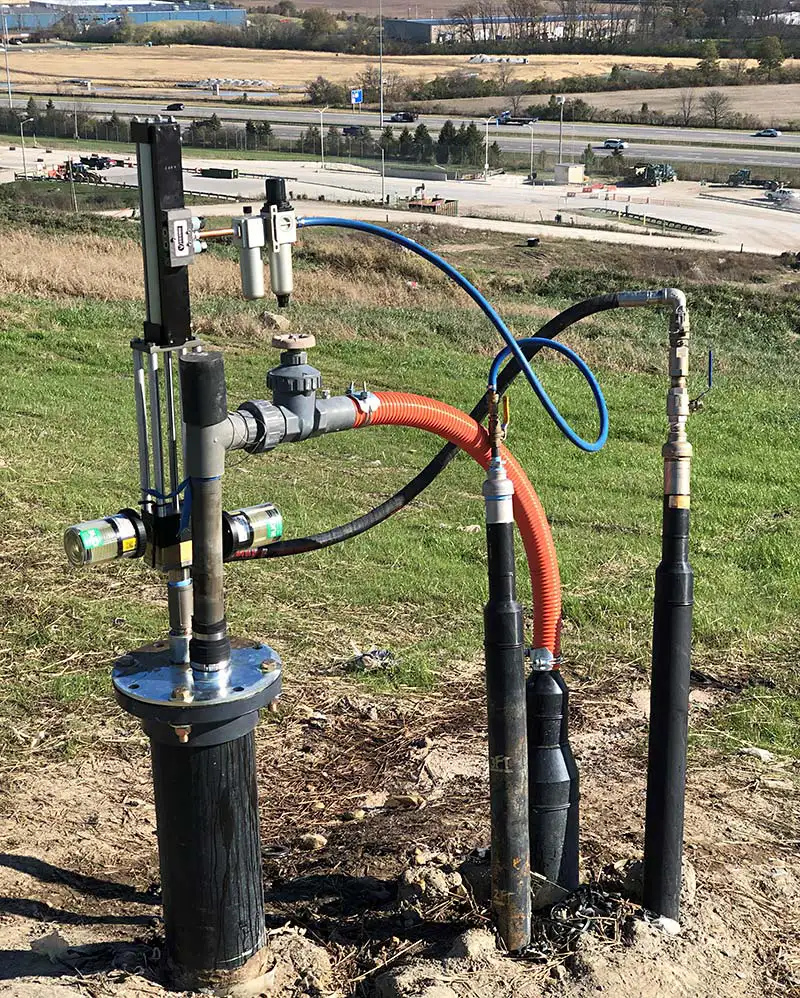
An outdoor setup featuring various pipes, valves, and gauges connected to a gas extraction wellhead with a top-head drive pump. The equipment is installed on a grassy hill with a highway and industrial buildings visible in the background. Colorful hoses are attached to the apparatus.

The ETLF Issue

For the past several years, a growing number of landfill managers have confronted temperatures ranging from 150°F to 250°F or more (65°C to 121°C) from deep inside larger, wetter, maturing sites — not from subsurface fires but from biological or chemical exothermic reactions within zones of the landfill itself.

High concentrations of varied, recombinant leachate compositions in these Elevated Temperature Landfills (ETLFs) can lead to higher costs for treatment or even the refusal of local wastewater treatment plants to accept the leachate, according to a three-part series by Waste 360 in conjunction with ELEF.

Elevated temperatures also may result in slope instability due to reduced waste strength or increased liquid- or gas-pore pressures; surprise sinkholes, and rapid settlement – all safety and infrastructure issues.

In addition, odor and the possibility of offsite gas migration and leachate release have resulted in public demands for tighter operations and oversight and, occasionally, litigation. Research into the causes and spread of ETLFs is ongoing.

For the past several years, a growing number of landfill managers have confronted temperatures ranging from 150°F to 250°F or more (65°C to 121°C) from deep inside larger, wetter, maturing sites — not from subsurface fires but from biological or chemical exothermic reactions within zones of the landfill itself.